The fastest way to kill a measurement tool is to make people work for the measurement.
Anything that asks you to tag commits, wrap your agent in a special command, or remember to start a session gets used for a week and then abandoned. The only telemetry you can trust is the telemetry nobody thinks about. So the constraint for our VS Code extension was strict: zero config.
How it works
Install from the marketplace, sign in once, and forget it’s there. There’s no project setup, no file to commit, and no per-repo switches. As you edit, a bundled binary works out on your machine which lines came from you and which came from an agent, and records it as AI Git blame: line-level authorship that holds up even when you and an agent both touched the same file.
Attribution is written into git notes, so it travels with the repo and isn’t locked in our servers. On commit, only hashed metrics leave the machine. Your source code and filenames don’t.
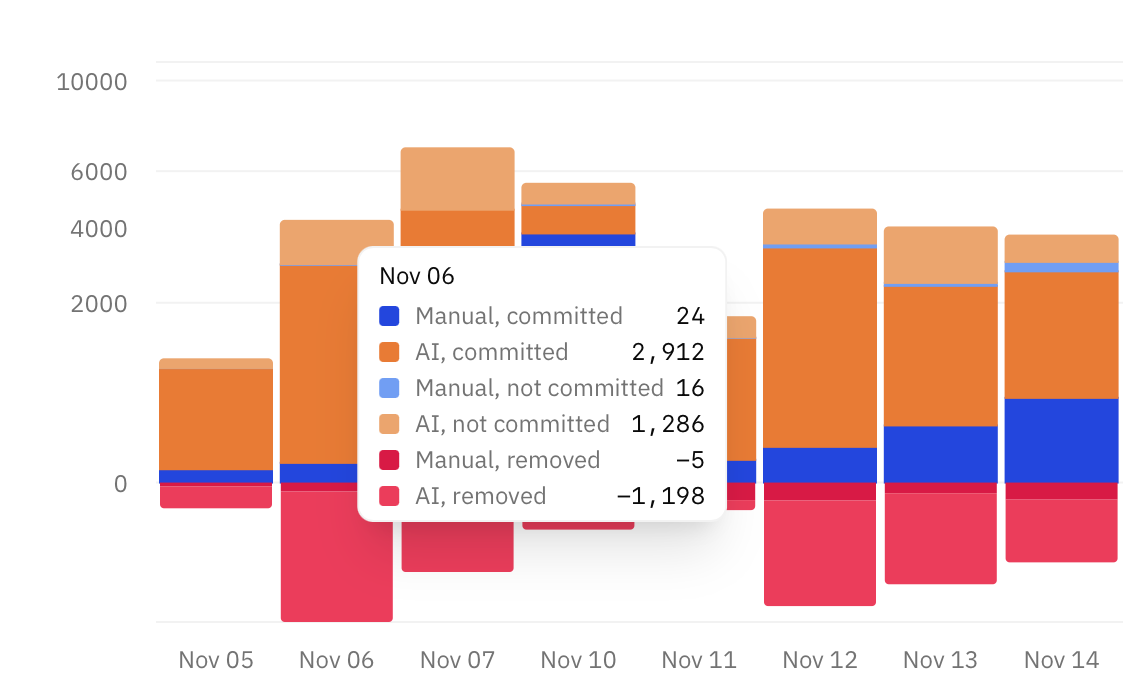
(sample data from early days of developing Source Trace)
Passive collection has a side effect we love. You can’t flatter the numbers by only logging your good sessions. One beta user put it well: “I forgot it was running, then opened the dashboard and the survival rate was lower than I’d have guessed.” That’s the point. Honest data is data you didn’t curate.
It also means we don’t care which tool you use. Switch agents mid-task and the attribution follows. And because none of it is curated, the number it adds up to, your survival rate, is one you can actually trust.